|
HOME
.
HIGHLIGHTS
Victoria Falls
The
Zambezi River
Lake Kariba
Lake Tanganyika
More...
GAME
PARKS
South Luangwa
North Luangwa
Lower Zambezi
Kafue
Lochinvar
Sioma Ngwezi
Kasanka
More ....
SAFARIS
Walking
Safaris
Birding Safaris
Canoeing
Safaris
Mobile Safaris
Elephant Back Safaris
Horse Back
Safaris
Photographic
Safaris
Open
Vehicle Safaris
ADVENTURE
/SPORT
White Water
Rafting
Bungi Jumping
River Boarding
Tandem Kayaking
Abseiling
Gorge Swinging
House Boating
Tiger and Fly
Fishing
Lion Walks
Cheetah Walks
Elephant back Trails
Driving around
CITIES & TOWNS
Lusaka
Livingstone
The Copperbelt
More
DIRECTORY
Accommodation
Adventures
Embassies
Golf Courses
Govt Offices
Private
Reserves
Restaurants-Lusaka
Safari Operators
Transportation
Tours
Travel
Agents
TRAVEL INFO
Quick
Facts
Getting
There
Getting
Around
Handy Information
Visa Info
WILDLIFE
Illustrated
Checklists
BIRDLIFE
In depth synopsis
Checklists
PEOPLE
History
Culture
Major Tribes
Ceremonies
ENVIRONMENT
Geography
Vegetation
Conservation
MAPS
PHOTO GALLERIES
VIDEOS
TOUR & SAFARI Co's
LINKS
ENQUIRIES
ADVERTISING
| KAFUE NATIONAL PARK

Found in the centre of western Zambia, Kafue National Park is the oldest and largest of Zambia's national parks covering a massive 22500 Km Sq. First established as National Park in the 1950s by the legendary Norman Carr, Kafue is one of the largest national parks in the whole of Africa. Despite its size and prominent location, only two hours’ drive from Livingstone, it remains little known and largely unexplored 
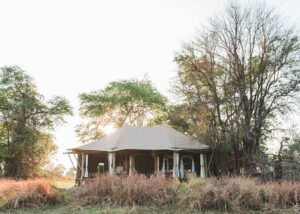
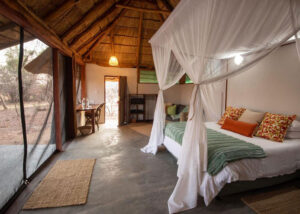
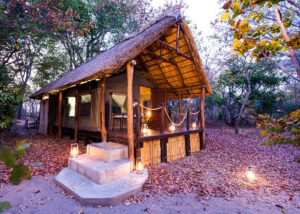
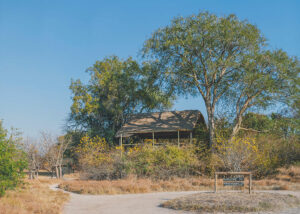
Kafue holds possibly the greatest diversity of wildlife of any national park in Africa and in recent years the Park has seen a small and well-managed growth in the number of Safari Camps and Lodges that operate in and around the Park. This new interest has brought with it more visitors and investment. Importantly the wildlife now enjoys an increased level of protection by the Zambian Wildlife Authority (ZAWA) supported by conscientious efforts of the safari camp and lodge operators.
Ecology The main vegetation of the Kafue area is called "Miombo"; a semi-deciduous woodland that is dominated by trees of the Brachystegia and Julbernardia family, often with mixed with small shrubs and a grassy undergrowth. This woodland has developed a degree of fire resistance and thus tends to survive despite the widespread uncontrolled bush fires that pass through them throughout the dry season

Other less common vegetation types are Teak forest, thickets and Mopane woodland that are well represented in the south. Throughout the Park and especially along some woodland edges there are open areas dotted with thousands of small grey termite mounds, many rubbed smooth by generations of warthogs and all making ideal perches for Chats, Thrushes and Francolin. In other places termite mounds are enormous, having developed over hundreds or thousands of years into small hills often topped with evergreen shrubs, Euphorbia ingens and Jackal Berry trees that provide browse and food for many animals throughout the year, especially important when fire has passed through the area.
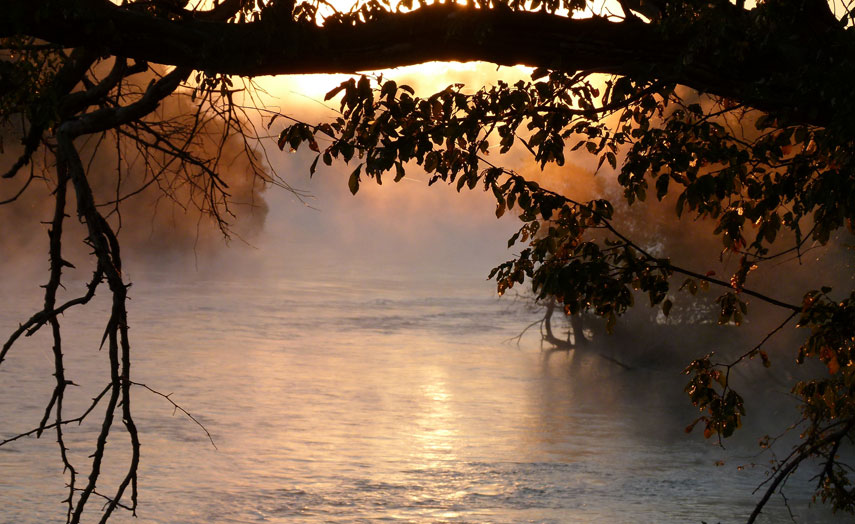
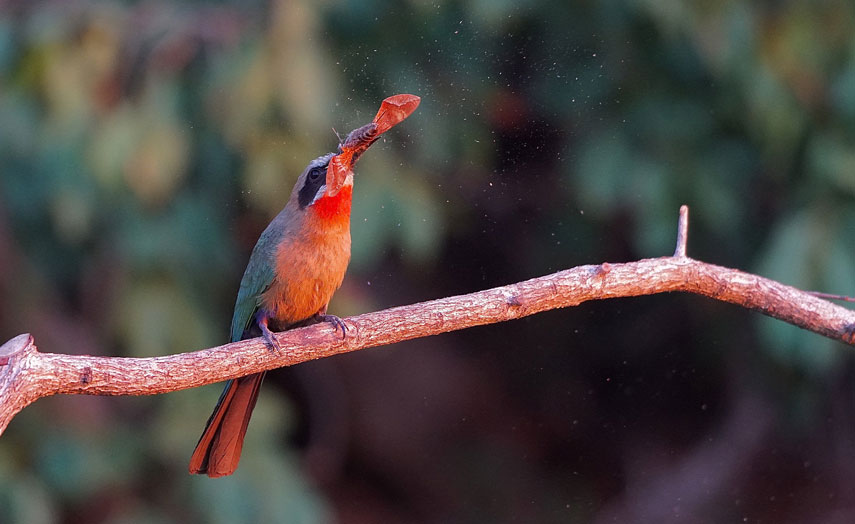
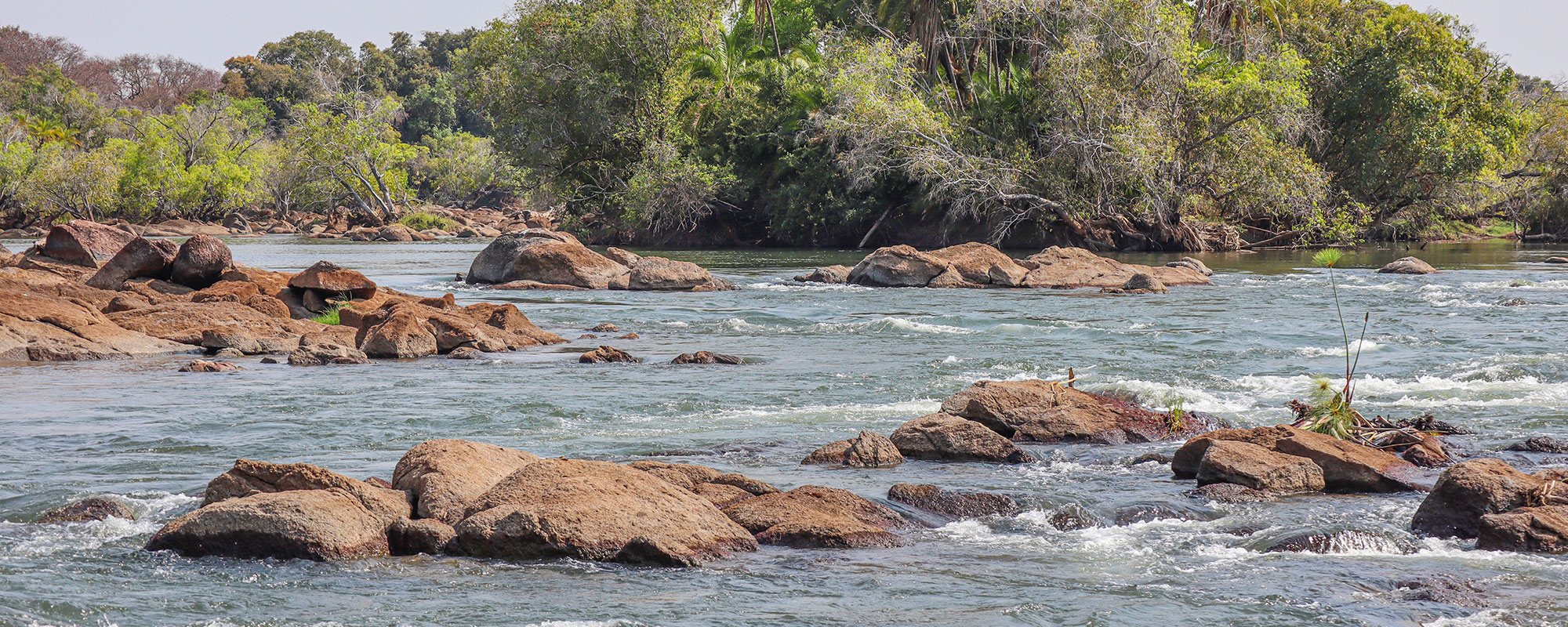
The open woodland or “bush” as it is familiarly called, is interspersed by scenic grassy depressions and rills that are typical of this landscape and are known as "Dambos'". With near constant water these open grasslands provide lush grazing even in the dry season attracting a wide variety of animals especially warthog, antelope and birds. The Park is dissected roughly North to South by the Kafue River, major tributary of the Zambezi. The Kafue is a long old river that changes its moods from broad slow flowing reaches, to swift channels between tree-clothed islands and spectacular rapids before it is stemmed by Itezhi-Tezhi dam below which it opens out across the vast vistas of the Kafue Flats. Sometimes the streams that feed it have steep sandy banks that provide nesting sites for Bee Eaters and sheltered ledges and beaches that are favoured by otters, water monitors, hippo and crocodiles. The larger tributaries are the Lufupa and Lunga in the north; the Luansanza and Musa in the centre and the Nanzhila in the south. The Kafue and Musa rivers flow into Lake Itezhi-Tezhi which covers 370 km sq of tranquil water and is a haven for wildlife watchers, fisher folk (excellent fishing for bream, pike and barbel) and boating enthusiasts.

The Busanga Plain found in the north-west is regarded as the jewel in the crown of this beautiful park. Busanga is a wide flood plain which is inundated for much of the year, generating expanses of grazing and lush water meadows for thousands of red lechwe and Cape buffalo; birdlife is prolific with Spur-winged Geese, Pelicans and flocks of Open Billed storks that can be seen spiraling in the thermals over the plains rising and falling to the lagoons where they feed on snails and invertebrates in the shallows. Crowned cranes, Saddle-billed Storks and Wattled Cranes search amongst the grass for insects, frogs and small reptiles.

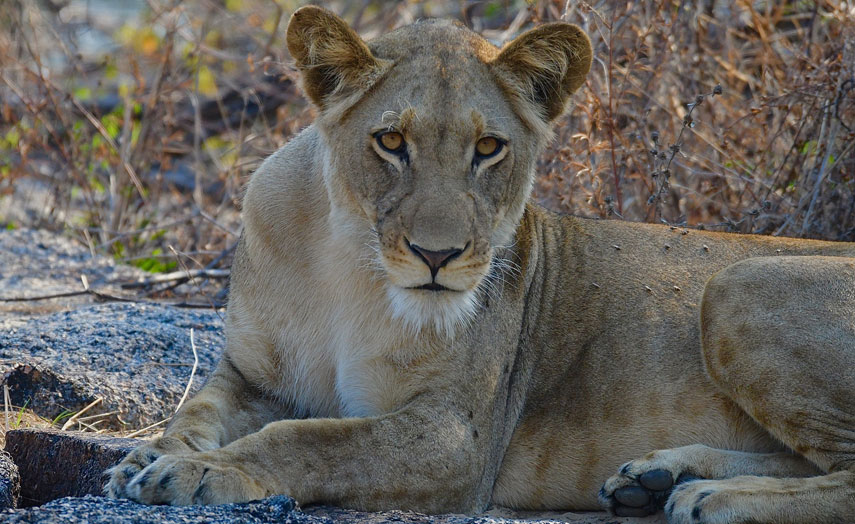
The Plain is also renowned for frequent sightings of lion, leopard and cheetah. The Busanga lion prides in particular are well known to the expert guides from the few safari camps that operate in this remote area and are a “must see” for any safari to Kafue. Wilderness Safaris operate very high quality camps on the Plain and offers balloon trips at certain times of the year.

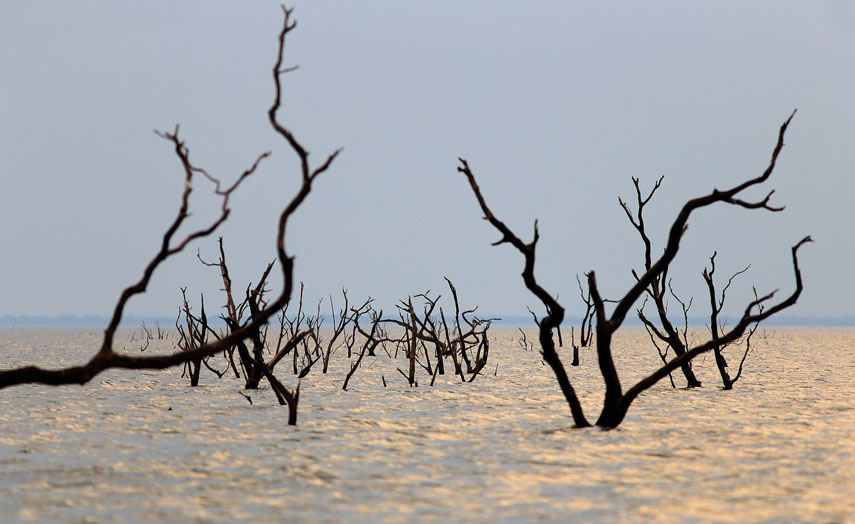
In the south the Kafue runs into the Itezhi Tezhi Dam covering an area of 370 square kilometres. This vast inland sea is surrounded in parts by grassy plains, often mowed by hippos. Rocky bays and stretches of submerged trees provide perfect perches for the many waterbirds inhabiting the area - fish eagles, cormorants, spoonbills and the stately goliath Heron. Elephant. buffalo, zebra and wildebeest frequent the dam. Itezhi is also an angling paradise and home to an annual fishing competition. 
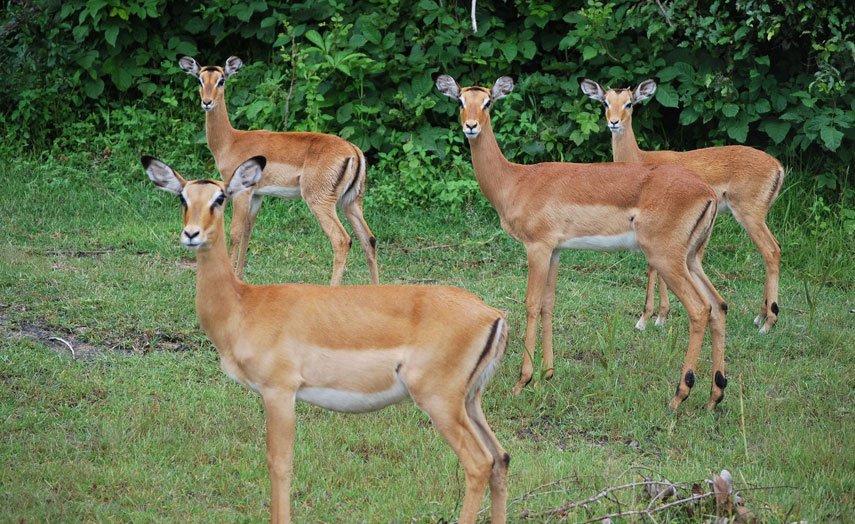
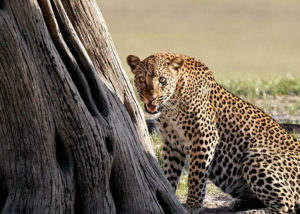
Wildlife A number of rare antelope such as yellow-backed and blue duiker, sitatunga and key predators such as cheetah and wild dogs are increasingly seen. Kafue is regarded as one of the best places in Africa to encounter leopard, seen frequently especially on night drives and it is not unusual to watch a leopard at a respectful distance as it stalks a bushbuck or as it lays in wait for an impala to stray close enough to make a kill.
It is also possible to encounter cheetah at any time and they often observed in the central Kafue areas and in the South on the Nanzhila Plains and on the northern Busanga plain.

On both sides of the Kafue River wild dogs appear to be on the increase, recovering from low numbers in the last decade. This very mobile animal is difficult to track but visitors have enjoyed many more sightings in the last few years, which is wonderful for guests, researchers and guides alike.

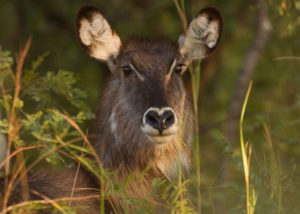
The Kafue National Park is home to more species of antelope recorded than any other park, including red lechwe, Liechtenstein's hartebeest, roan, sable and puku, blue wildebeest, sitatunga, defassa waterbuck, reedbuck, eland, bushbuck, reedbuck, oribi, grysbok, steenbok and three species of diminutive duiker.

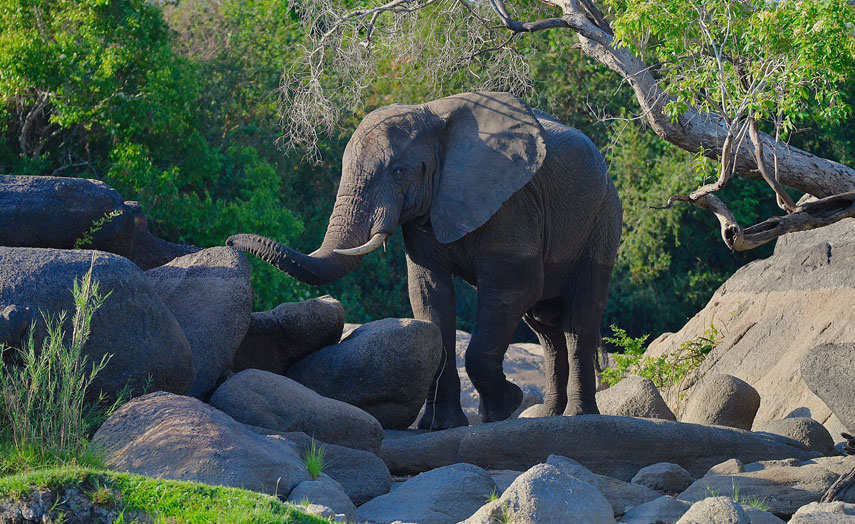
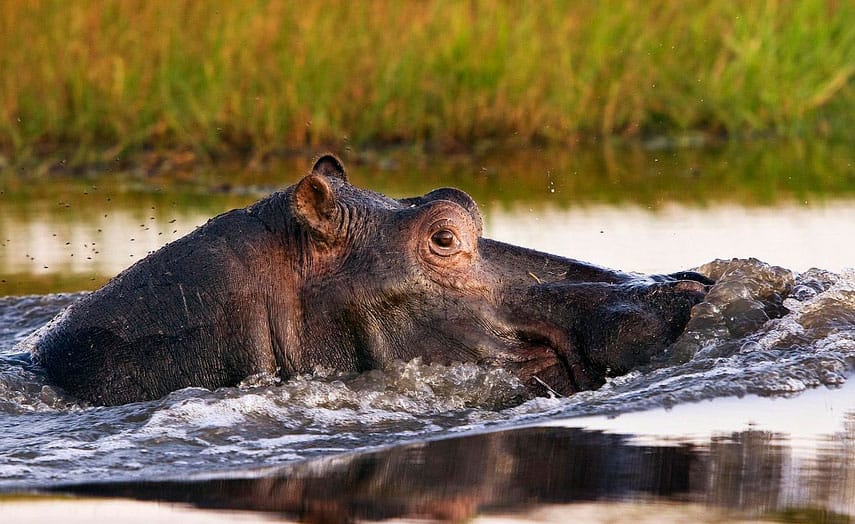
The Kafue River and its tributaries rivers are a magnet for wildlife of every possible kind and there are lots of hippos and crocodiles to be seen along most of the waterways. Magnificent sightings of elephant herds are being made throughout the Park and with improved protection mature confident bulls habitually visit some of the Safari Camps.
 The Kafue elephants had a hard time from poachers in the 1980s and 1990s and although this problem is now under control, the breeding herds of females and young are often found to be nervous, so that a patient approach to elephant encounters is required especially on the Busanga Plains and around Ngoma Forest in the south and this has led to elephants becoming more relaxed and visible than in the past. In addition, there is a plethora of other unusual wildlife with pangolin, bushpig, spring hare, land monitor and aardvark. Many more small animals that feature in the park sightings include: banded, slender, water, Selous & white tailed mongoose – 8 species altogether. Genet and civet cats, lesser & thick tailed bush baby's, two kinds of baboon, duiker (including blue & yellow-backed species), grysbok, spotted necked and clawless otter, honey badger to name some of the 158 species of mammals recorded.

Crocodiles are found basking in the sun on the banks, as are water monitors and many birds.

Birds: 
More than 494 species of birds have been recorded in Kafue National Park and a further 22 species in the surrounding Game Management Areas, obviously too many to recite here, but notable species include; Pel's Fishing Owl, African Fin-foot, Wattled Crane, Southern Crowned Crane, Fulleborn’s Longclaw, Chaplin’s Barbet (Zambia’s only endemic bird), Black-cheeked Lovebird, Spoonbill, Bocage's Akalat, Scaly-throated Honeyguide, Black-breasted Snake Eagle, Goliath Heron, Böhm’s bee-eater, to name but a few.
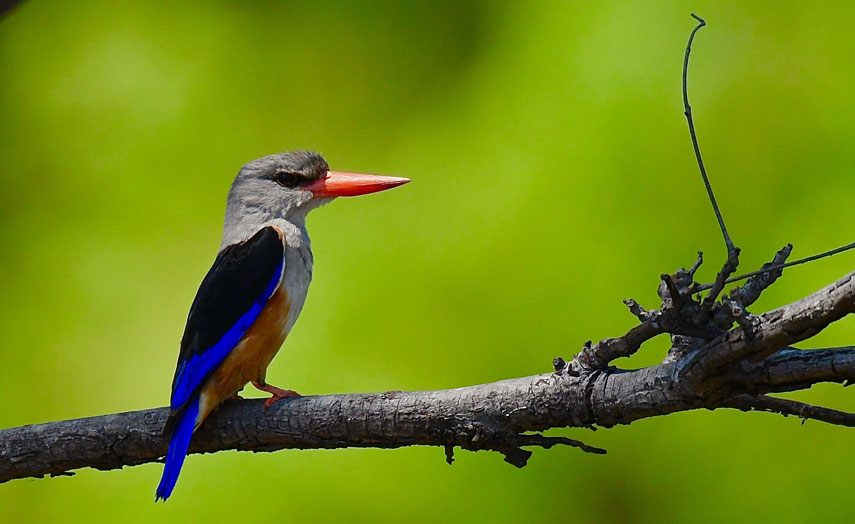
During the day Fish Eagles call from the river, and King fishers dart about. Often seen in camps are Paradise Fly Catchers, Blue Cardinals, Fire Finches and tiny Sunbirds. Amongst the woodlands and riverine forest Martial Eagles glide over the tree tops their presence sometimes revealed by the Gray Lourie with their familiar “go away” call. The fllodplains of Busanga and Nanzhila attract armadas of Pelicans that come together in charming rows as they herd fish into the shallows. Pratincoles fly low in open areas and at night spotlights show up Dikkops and churring Nightjars.

When to visit? The dry season runs from June to October. Some parts of the Park can be inaccessible at any time from November - April. The dry season enables easier driving and game is easier to see. At around 4000ft temperatures are mild compared to the Lower Zambezi and Luangwa valleys. The Park can be very different at different times of year. The wet season from November to May is particularly difficult to get around in due to the heavy black cotton soil, which turns to sticky clay. But to be able to see the plains flooded in the green season, and the wildlife they attract is a spectacle well worth the visit and can be achieved with the help of light aircraft servicing some of the permanent camps in the northern Kafue and via Ngoma and Puku Pan all-weather airstrips in the centre and the south. After the rains everything is awash with beautiful green and lush vegetation. A few camps stay open all year. The ones closest to the main dissecting road through the Park, between Nalusanga and Tateyoyo gates, can be accessed in 2-wheel drive or 4 x 4 without problems. The wildlife viewing loop roads within the Park are less but the animals migrate to higher areas so the viewing in some places can be excellent. The road up towards Lufupa gets closed as it has a notorious amount of black cotton soil and anyone stuck would be in extreme difficulty. The road to the Chunga and Kafue Hook areas stays open but 4 x 4 is essential when you leave the main road – the 17 km road to the old Pontoon opposite Chunga stays open in the rains and the main tar road M9 from Lusaka to Mongu has good viewing along it especially near the Kafue River. Boat trips, including canoeing safaris (based at Kaingu Lodge) on the Kafue are excellent and walking safaris are is still possible in the early rains when the grass is not too high. You also have the advantage of the Safari Camps being quite a bit quieter so more attention for the guests! With the arrival of migratory birds, birding is fantastic and the emerging vegetation in its spring flush is a huge source of exploration and delight! Many Safari Camps offer special reduced rates for the green season.

Getting there (updated July 2011) The Park in general is easy to access being only two hours from both Lusaka and Livingstone. The main access roads are mostly good, but do seek local advice if you plan to drive by yourself. The Park can be accessed by air charter and there are operational airstrips at Ngoma, Lufupa, Puku Pan, Hippo Lodge and Masozhi. By Vehicle, Kafue can be reached from all four sides of this part of Zambia but 4 x 4 vehicles are a must except for Mayukuyuku Camp and Mukambi Lodge where 2 wheel drive is fine all year round. • From Lusaka take the main M9 tar road due west to Mumbwa. If planning to visit the north-eastern camps such as Hippo Camp, Mushingashi or McBrides then go into Mumbwa town (124 kilometres) and take the left turn at the first roundabout by the Total filling station and then a right turn almost immediately after crossing the Mushingashi River will put you on the northern Kasempa D181 gravel road out of Mumbwa. • To reach the southern section of the park, continue through Mumbwa on the main M9 road. Sixty-six kilometers from Mumbwa having passed through the Nalusanga Entrance Gate is a well sign-posted turning to Itezhi-Tezhi Town and Dam and to the southern Lodges and Camps. This previously appalling, once tar road the D769, has recently been graded back to gravel and is a lot better although it still requires a strong vehicle. • To reach the Busanga plain and nearby camps, take the M9 road that goes through the Park until you reach the Kafue Hook Bridge, shortly after the bridge is a gate on the northern side. This leads to the northern Lodges and Camps. The driving time from the bridge to the Busanga Plain is about 5 hours. One can access the Plain alone but it’s very easy to get lost there, so do seek local advice. There are no self-drive campsites on the Busanga Plain; in fact there is no private camping allowed anywhere in the Park – campers must stay at designated campsites. Mayukuyuku is the closest to Busanga but it is still a long drive from the Plain. • From the west, take the Mongu-Lusaka main M9 tar road which dissects the park; entrance is at Tateyoyo Gate. • From the north, coming from the Copperbelt, take the road to Solwezi and then to Kasempa. (It may be useful to note there is a very good hospital at Kasempa but fuel cannot be relied on). From here, follow the good D181 Kaoma road and branch off it to the Kabanga Entrance Gate which will bring you to the north-western part of the Park. To reach the north-eastern section of Kafue the gate is at Kabulushi, take the left fork off the Kaoma road on to the D 301 to Mumbwa and follow this road to the Lunga Pontoon reached after about 98 Kilometres and the on again to the Lubungu Pontoon, another 86 kilometers taking you to the Kabulushi Entrance Gate. Either way this is a long 4 x 4 drive and it is advisable to get information well in advance from the Lodge and Camp operators. • From Livingstone travel 124 kilometres to Kalomo on the excellent main T1 tar highway to Lusaka; turn left through the open air market to take the D714 graded road 74 kilometres to Dundumwezi Entrance Gate at the southern edge of the Park leading to Nanzhila Plains Safari Camp, Ngoma and Lake Itezhi-Tezhi, all of which are accessible for most of the year. The Dundumwezi road has recently been graded and is easy to traverse with a 4 x 4 vehicle making the total driving time from Livingstone and the Victoria Falls about hours only. Kalomo Kobil station is the last place to fuel up before you travel on to the Park


| 

|