ANTELOPE OF ZAMBIA
BUSHBUCK
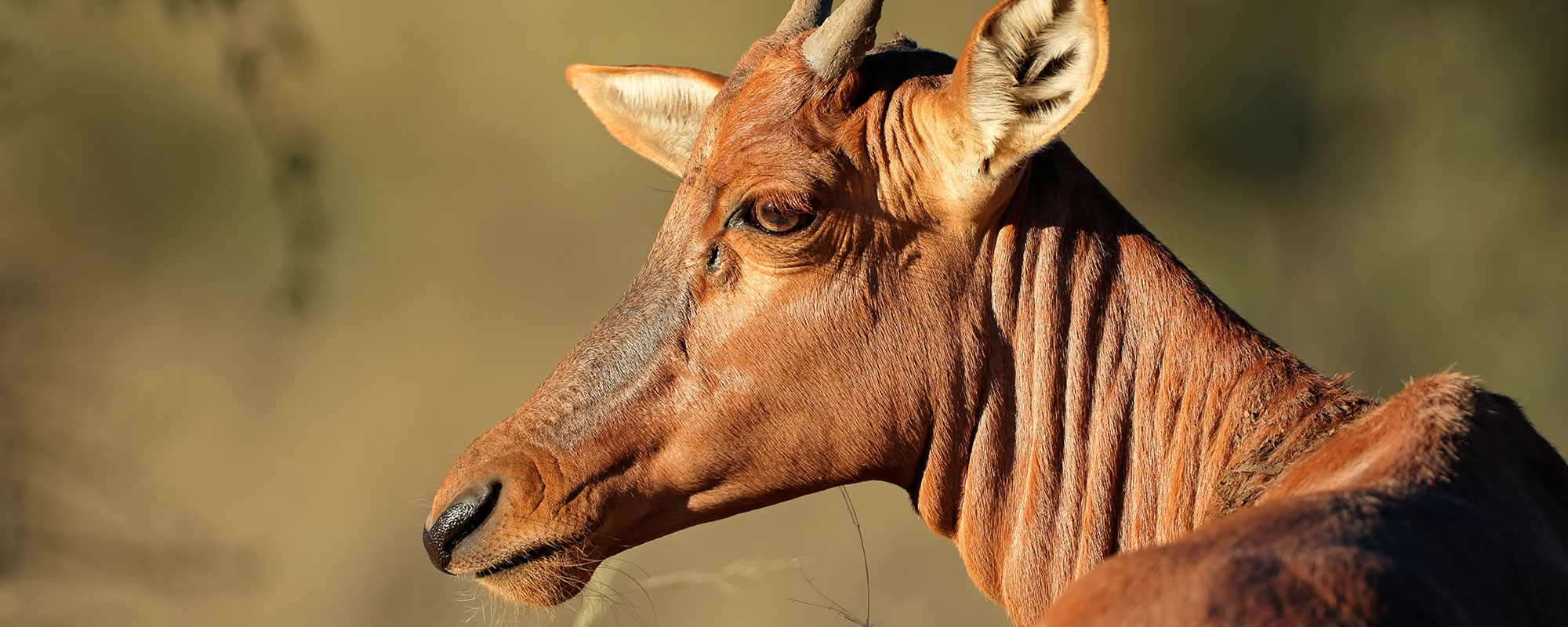
The elusive bushbuck, with its striped back and spotted flanks, is one of the prettier antelope but being solitary and preferring to inhabit areas of dense cover, they are not seen very often and they scurry away quickly. They browse on foliage and fruit and sometimes remain for hours beneath certain flowering trees, especially the sausage tree (Kigelia Africana).
DUIKER
Three kinds of duiker occur in Zambia. The yellow-backed Duiker is the largest of the three with backward-directed horns in line with their nose profile. It has a dark brown coat with a conspicuous yellow patch on the lower back and rump, the hairs on which rise when alarmed. They move alone in dense thickets and forests. This antelope is very rarely seen as it is mainly nocturnal. The blue duiker also has backward-pointing horns but is much smaller and greyish brown in colour. They browse on leaves and small fruit and are also rarely seen. The common duiker is usually seen on the move in the early morning or evening in scrub or woodland. It hides during the heat of the day in patches of thick vegetation. It has a very characteristic way of running in a zig-zag fashion interspersed with plunging leaps.
ELAND
Eland are graceful animals, with their large pendulous dewlap and pale fawn colour. The largest of the antelope found in Zambia, the eland can weigh up to 680kg / 1 500lb. Their weight, however, does not hamper them from jumping, virtually from a standing position to a height of more than two metres / seven feet.
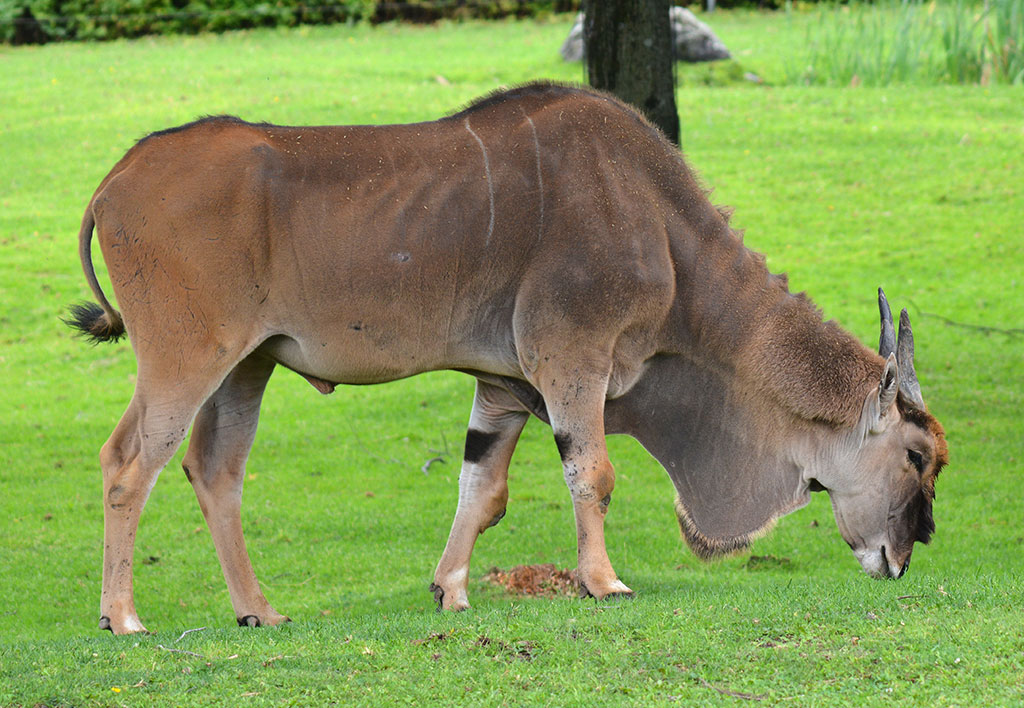
Both sexes have horns in a short outward direction with an upward twist, which are important for feeding. To collect twigs they grasp them between the stalks, breaking them loose with a shake of their head and powerful neck.
A shy animal that runs at the slightest disturbance, perhaps because they have always been hunted, especially by the San tribe who worshipped them and ate them as a form of communion. They move in medium-sized herds and old bulls tend to be solitary.
IMPALA
The most numerous animal in the bigger national parks, impala are gregarious and move in large herds. They are mixed feeders and eat mainly grass in the wet season and leaves as the dry season progresses.
They can also be found eating the fallen red fleshy flowers of the sausage tree. During the rutting period the males are very noisy, emitting loud grunting sounds while they fight and display. In the process they sort out their hierarchy, terminating in the dominant male and taking over a harem of 20 or more ewes.
They have a well-defined lambing season starting at the end of October and in the following weeks, nearly every ewe is seen with a baby. Impala have an unusual tuft of black hair covering a scent gland on the hind legs, above the hooves.
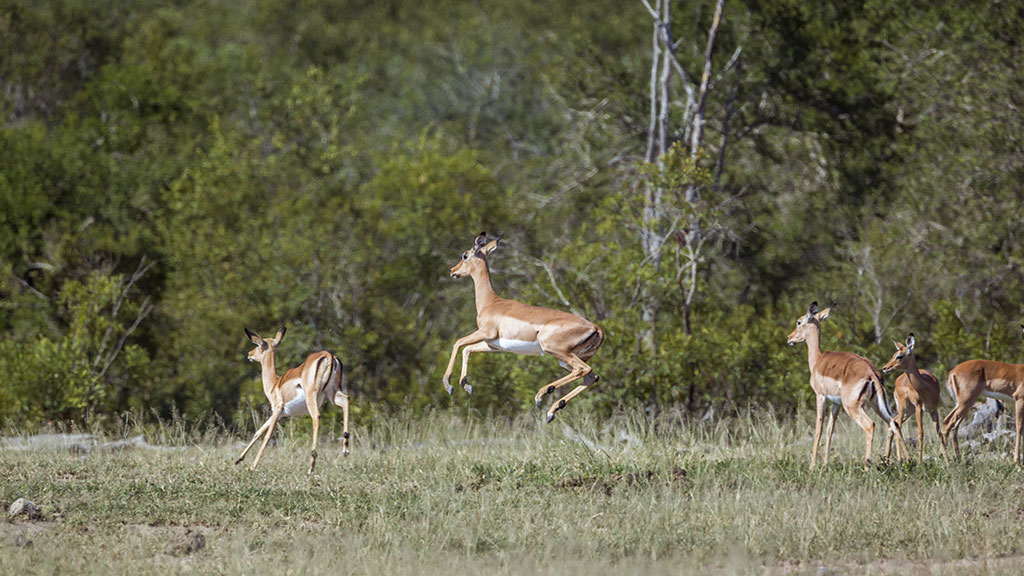
To escape their pursuers they employ a confusing, zig-zag escape route, with sudden directional changes and exceptionally high leaps that make it difficult for the attacker to strike.
KLIPSPRINGER
Living on rocky outcrops and on mountain sides, these small antelope with short pointy horns occur sparsely in the Muchinga escarpment of the Luangwa Valley and occasionally in the north of Zambia. They bounce on the tips of their rubbery hooves as they walk, making their very long legs look even longer. Unlike the coats of other African antelope, their olive-yellow coat speckled with grey is stiff and brittle, serving as a cushion to ward off the shocks of hitting rock walls as they jump. They browse on herbs and shrubs and drink water when it is available but can draw enough water from their food.
KUDU
A very beautiful antelope with long twisting spiralled horns displayed by the males. They are usually seen in small groups and occasionally males can be solitary or in bachelor parties. They are purely browsers and not known to eat grass.
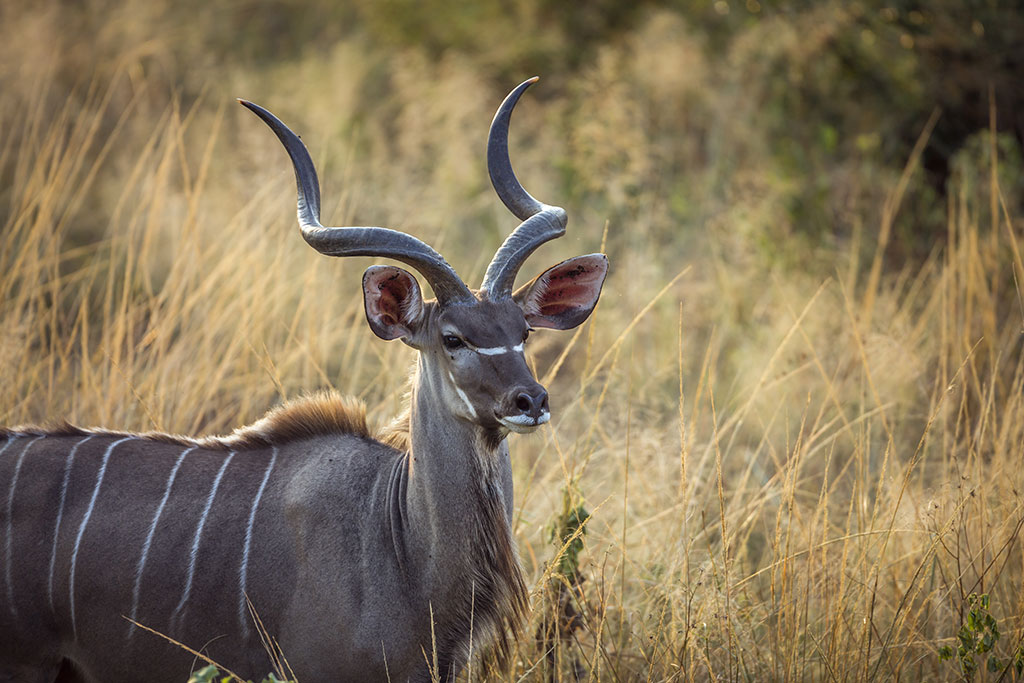
Being very fond of the evergreen Trichelia emetica (often called a Natal mahogany), there is a very distinct ‘browse line’ as if they’ve been pruned by clippers.
Despite their impressive weight they can easily clear two metres / seven feet when jumping. Their acute hearing is accentuated by an ability to turn their large rounded ears in almost any direction.
LICHTENSTEIN’S HARTEBEEST
Found in the northern parts of the country in small numbers, this light fawn coloured antelope prefers miombo woodland habitats and feeds exclusively on grass. It can sometimes be seen on the floodplains towards the end of the dry season seeking new pastures.
LECHWE
A semi-aquatic antelope that often moves in very large herds of several hundred. They graze knee-deep on the floodplain grasses. They have long thin horns going backwards and upwards. There are three kinds of lechwe found in Zambia.
The black Lechwe is the darkest of the three, with a rich blackish brown coat and is found only in the Bangweulu Swamps.
The Kafue lechwe has larger and longer horns than the other two species with dark shoulder patches and a light brown coat. It is found in the floodplains of Lochinvar.
The red Lechwe, found in the Busanga area of Kafue National Park, is yellowish-red in colour and has dark brown markings on the legs.
ORIBI
Oribi are found occasionally in the Luangwa Valley, more often in the Bangweulu Swamps and quite common in Kafue and Lochinvar National Parks. They are distinguished by the bare black glandular patches below their large oval-shaped ears. They like to graze on open plains and dambos and have a characteristic ‘stotting’ action when alarmed, jumping into the air with all four legs held stiff and straight. Some experts believe this may be done to give them a better view of approaching predators but it is more likely they are trying to entice the predator to chase and so divert attention from the herd.
PUKU
Plentiful in Luangwa and the Zambezi Valley, these furry orange antelope with thick, heavily ringed V-shaped horns, are gregarious and graze along the floodplains near permanent water.
They have limited distribution in Africa, confined to the area drained by the Zambezi and its tributaries and a few isolated pockets in Tanzania. They move in herds of up to 30 or so.
REEDBUCK
Common in Kafue but scarce in the other parks, the reedbuck is a gregarious animal moving in family groups of three to five. They are found in dambos and other open grassy areas. They have a characteristic ‘rocking horse’ action: the tail is turned up to expose the white ventral surface and they whistle at each jump forward.
ROAN
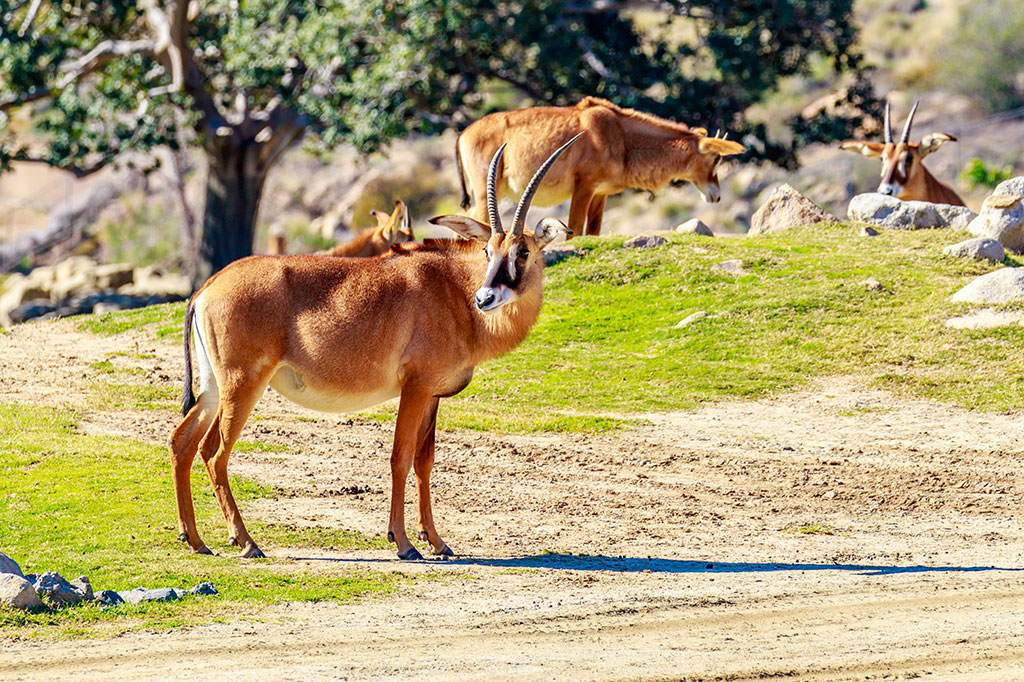
Common in Luangwa but scarce in the other parks, roan are large light brown antelopes with ringed horns, rising upwards and backwards in a small arch.
They move in herds but bulls may be solitary, staying near dambos, light woodland and open plains.
SABLE
Sable are often considered the most handsome of the antelopes, with a deep brown coat and long backward arching horns. Adult males have a deep glossy black coat and with the pronounced curve of their long horns. They are fairly common in Kafue but scarce in the other parks.
SHARPE’S GRYSBOK
A tiny solitary antelope with short pointy horns only 3-5cm / 1-2in long. It favours thickets and feeds on the leaves of low-growing shrubs. Not often seen due to its shy and nocturnal habits. Distinguished from the duiker of the same size in that it runs smoothly not in a zig-zag pattern, with its body and head held low. Often seen on night drives in South Luangwa National Park.
STEENBOK
This small antelope with straight upward pointing horns and a lush rufous coat can be seen in light woodland where it browses and grazes. It often eludes its predators by darting down old burrows.
SITATUNGA
A beautiful reddish brown animal with twisted backward pointing horns, faint white strips on the back and white spots on the flanks and cheeks. A true aquatic antelope found only in swamp grasses having specially adapted long pointy hooves to support them on marshy soil. Found in the Busanga area of Kafue National Park, the floodplains of Lochinvar and Kasanka.
TSESSEBE
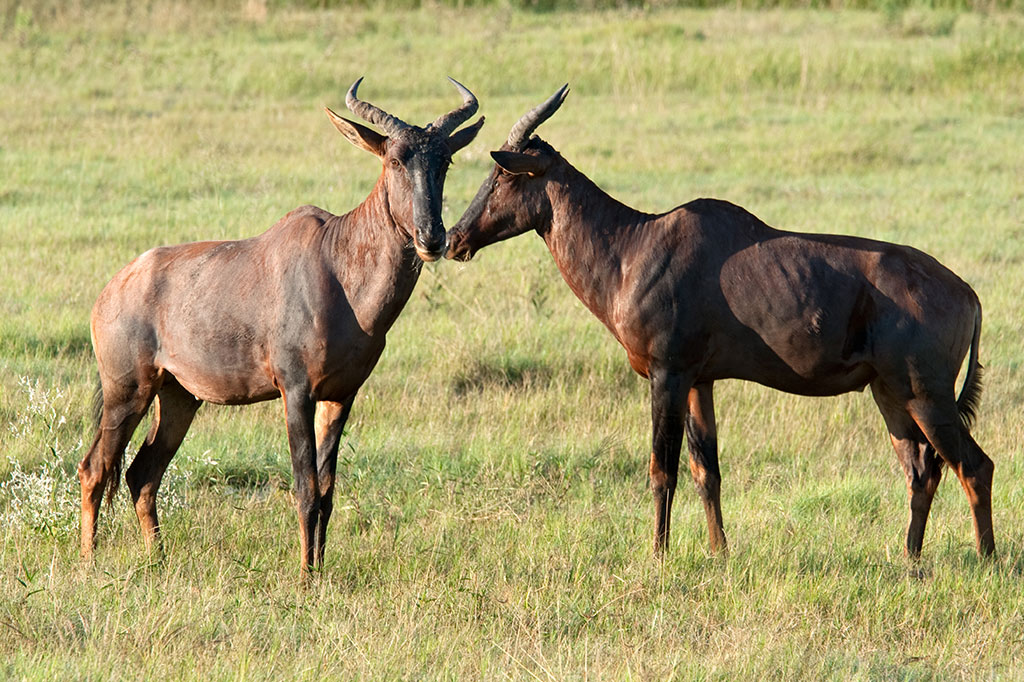
The fastest of the antelope, tsessebe are found only in the Bangweulu Swamp region.
These rare antelope have a smooth reddish brown coat with a light fawn belly and a tasselled tail. They graze on open plains.
WATERBUCK
The waterbuck has a long-haired, often shaggy brown-grey coat that emits a smelly, greasy secretion thought to be for waterproofing. They have pronounced U-shaped horns.
Two subspecies of waterbuck occur in Zambia. In the Luangwa and Lower Zambezi Valleys they are distinguished by the white ring on their rump (Kobus ellipsiprymnus) whereas those in the Kafue have a solid white patch on the rump (Kobus defassa).
They move in fairly big herds near dambos and on aquatic grassland but always close to woodland or thicket. Hyenas, lions, and leopards are their major predators but crocodiles, wild dogs and cheetahs also take waterbuck.
WILDEBEEST
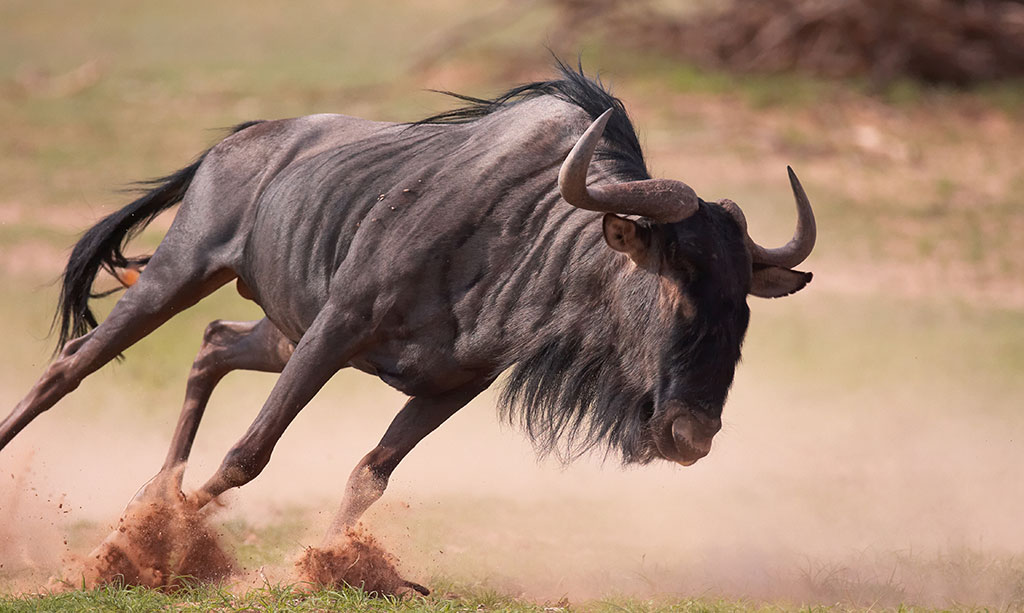
Cookson’s wildebeest occur in the northern part of Luangwa Valley and the blue Wildebeest in the Western Province. In November every year, enormous herds migrate across the Liuwa plains.
Their young are born a reddish-brown and can stand within minutes of birth. They take on their mature colour after two months.
They move in large herds headed by one to three bulls that trot around the group in their peculiar, head high, rocking gait, forcing the herd into a tight mass.