LEOPARDS
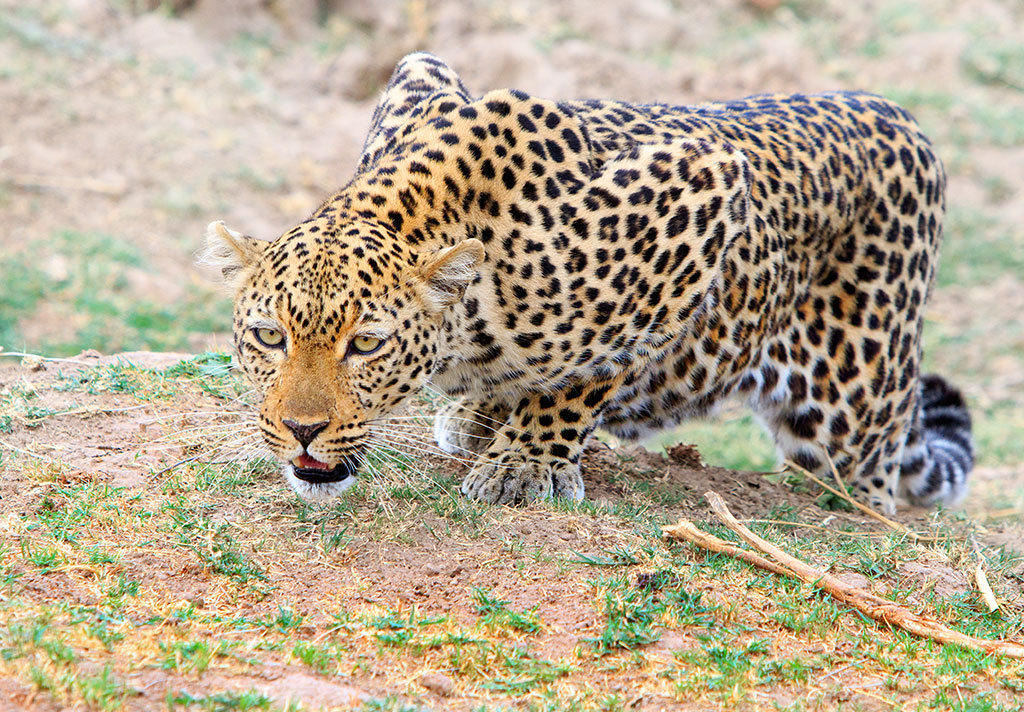
The most secretive and elusive of the large carnivores, the leopard is also the shrewdest.
Pound for pound, it is the strongest climber of the large cats and is capable of killing prey larger than itself.
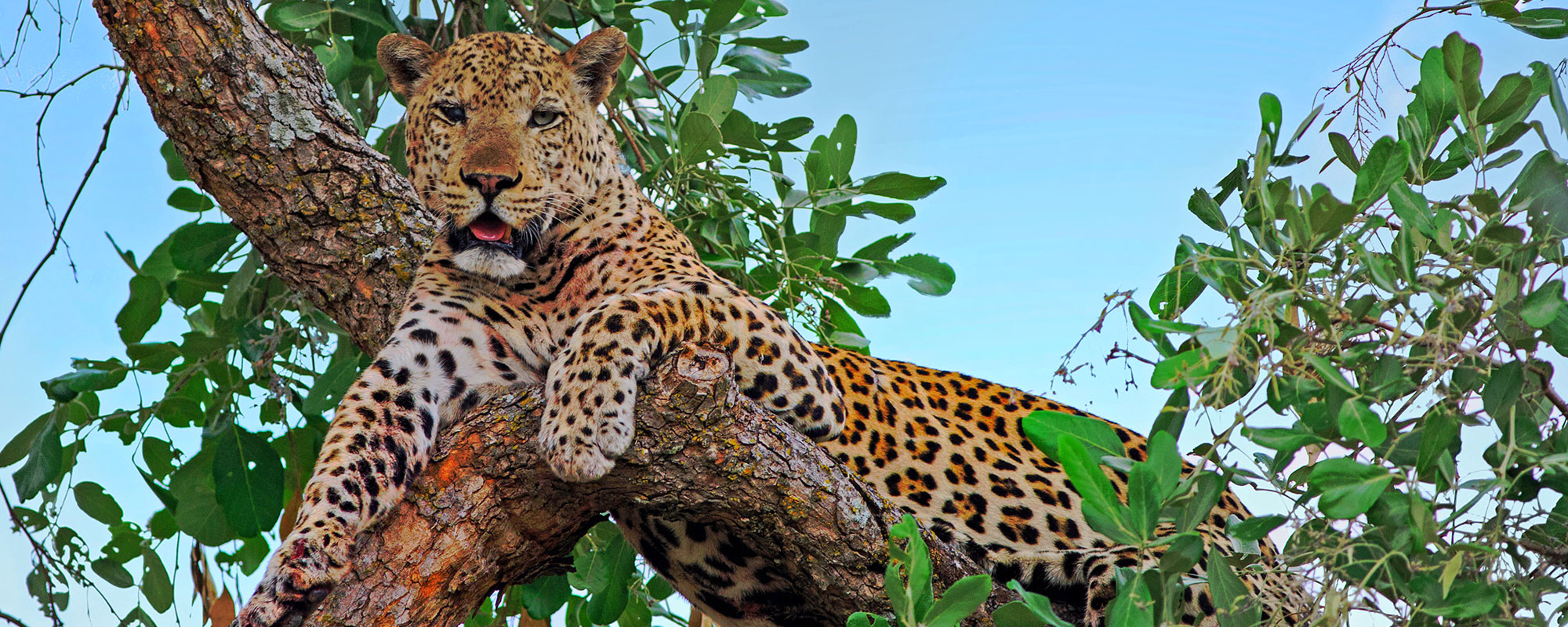
The leopard is a solitary animal, hunting usually at night, and spending much of the day hiding in thickets or in the forks of a tree. They prey on small antelope, rodents, baboons, monkeys and birds (such as kori bustards), being quick and efficient hunters.
The power of their claws, legs and neck muscles is astonishing. They will usually haul their kill, often weighing more than themselves, up into a tree to keep it from scavengers. It then rests from its exertion and at its leisure, begins to tear out tufts of fur. Having cleared a patch of flesh it starts its meal, saving the remains for later, safe from vultures and hyenas. Leopards, like other cats, spend about two thirds of their lives sprawled out in relaxed slumber, digesting their meals and resting after tiring stalking and hunting.
Leopards continually move about their home ranges, seldom staying in an area for more than two or three days at a time. With marking and calling, they usually know one another’s whereabouts. A male will accompany a female in oestrus for a week or so before they part and return to solitude.
Dense bush in rocky surroundings and riverine forest are their favourite habitats but leopards adapt to many places in both warm and cold climates. Their adaptability, in fact, has helped them survive the loss of habitat to increasing human settlement.
Leopards are primarily nocturnal, usually resting during the daytime in trees or thick bush. The spotted coat provides almost perfect camouflage.
The rule to finding a leopard is to look up into the trees and check for the tell-tale curved tail hanging down.